Mindiverse Shop
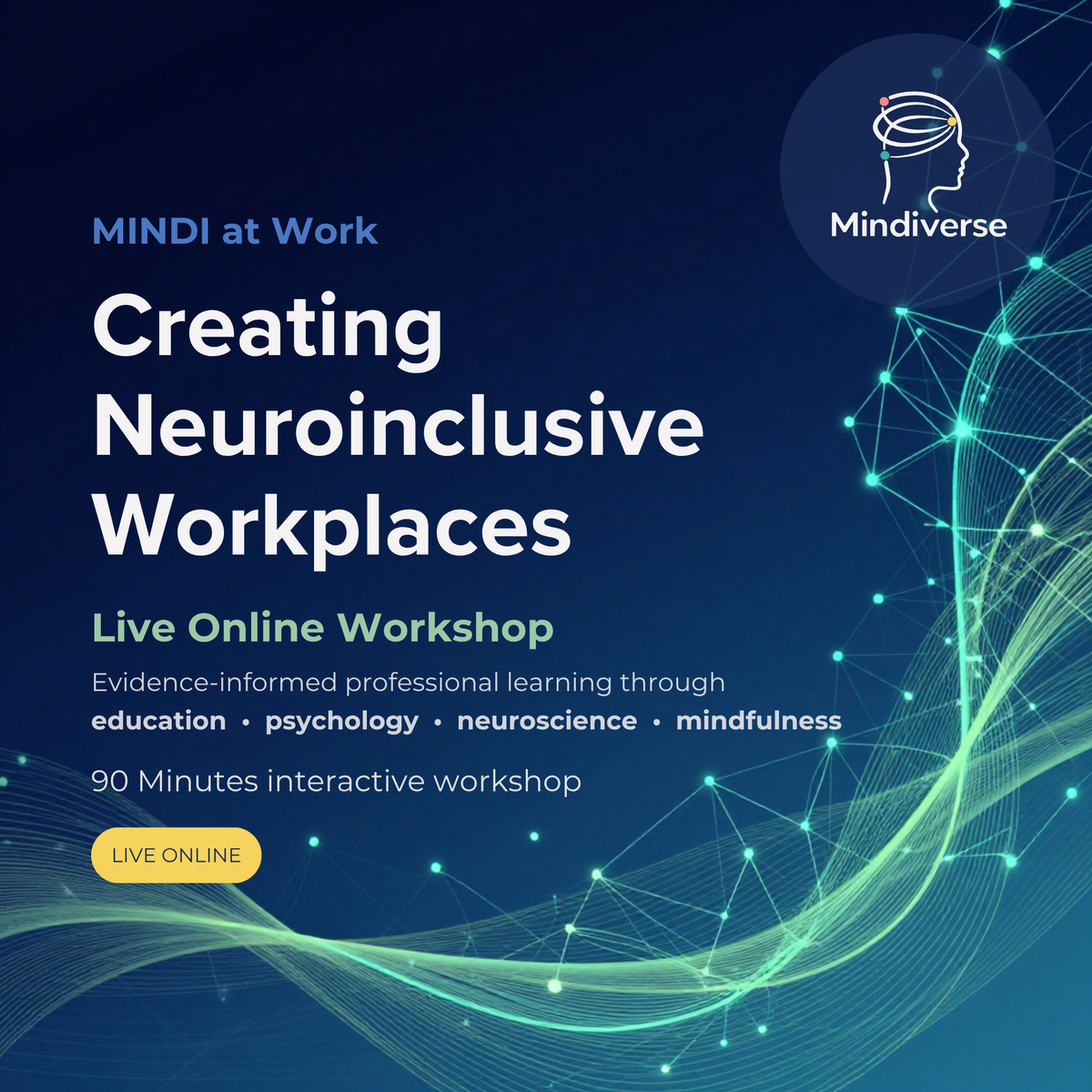
Creating Neuroinclusive Workplaces
Creating Neuroinclusive Workplaces
Couldn't load pickup availability
Ever wondered whether the way your workplace communicates, runs meetings or organises everyday tasks might be making things harder for some people?
We all think, process information and work differently. Yet many workplace practices are built around assumptions about how people should communicate, concentrate or contribute.
In this practical workshop, we'll explore how to recognise and reduce some of those barriers. We'll look at neuroinclusive approaches to communication, meetings, learning and everyday working practices, with opportunities to reflect on what could work in your own organisation.
Where: Live online
Duration: 90 minutes
Who: Managers, HR and L&D professionals, team leaders, workplace representatives and others interested in neuroinclusive practice
Experience: No previous knowledge of neurodiversity needed
Booking: Pay online or request an invoice
What will I learn?
By the end of the workshop, you'll have explored how to:
- Understand neurodiversity at work: Explore neurodiversity, individual differences and how workplace environments can influence people's experiences.
- Recognise barriers to inclusion: Identify how environments, communication, meetings, expectations and everyday working practices may create unnecessary barriers.
- Build psychological safety and belonging: Consider how to help people feel comfortable contributing, asking questions, communicating their needs and requesting adjustments without fear of negative consequences.
- Make practical neuroinclusive adjustments: Explore ways to adapt meetings, communication, workflows, learning opportunities and management practices.
- Develop an inclusion action plan: Identify realistic improvements, involve employees in decisions and consider how to evaluate whether changes are helping. Distinguish between individual adjustments and inclusive design.
Who is it for?
This workshop may be particularly useful if you:
- Manage or support employees with different working and communication needs.
- Work in HR, learning and development, employee wellbeing or organisational development.
- Want to make meetings, communication or workplace learning more accessible.
- Are reviewing inclusion policies or everyday workplace practices.
- Would like practical ways to improve neuroinclusion within your team or organisation.
You don't need any previous training or specialist knowledge of neurodiversity.
What will we do?
Explore neurodiversity at work
We'll look at neurodiversity, different working experiences and why individual needs and preferences matter.
Recognise everyday barriers
We'll explore examples involving meetings, communication, sensory environments, workplace expectations and learning opportunities.
Consider psychological safety
We'll discuss what helps people feel able to ask questions, communicate needs, contribute ideas and request adjustments without judgement or negative consequences.
Try practical neuroinclusive approaches
Using examples and reflection activities, we'll explore changes to communication, meetings, workflows and management practices, drawing on Mindiverse's MINDI approach.
Make an action plan
You'll identify a few manageable changes to explore in your own setting, including ways to involve employees and gather feedback.
What's included?
- A 90-minute live, interactive online workshop.
- Practical examples, discussions and optional reflection activities.
- A downloadable workplace resource pack.
- Adaptable ideas and action-planning activities.
- A certificate of attendance.
- Opportunities to ask questions.
- A follow-up email with resources.
Why a brain-friendly approach?
Attention, executive functions, sensory processing, communication and information processing can vary considerably between people. The way a workplace is organised can influence how easily employees participate, learn and contribute.
We'll draw on psychology, neuroscience, learning design and neuroinclusive practice to consider how environments and expectations can be made more accessible.
We'll also explore why there isn't a single adjustment that works for everyone. Inclusive design can reduce common barriers, while individual adjustments and ongoing conversations remain important.
The aim is to identify changes that are practical, respectful and informed by the people they affect.
Frequently asked questions
Do I need previous knowledge of neurodiversity?
No. We'll introduce the key concepts and build on them through practical examples.
Is this relevant to small organisations?
Yes. Many of the approaches can be adapted for small teams as well as larger organisations.
Will we discuss reasonable adjustments?
Yes. We'll explore individual adjustments alongside broader inclusive working practices. The workshop doesn't replace individual HR or legal advice.
Will I need to share information about my employees?
No. You can participate without sharing personal or confidential employee information.
Can my organisation pay by invoice?
Yes. Select the invoice option when booking.
Can this workshop be delivered in-house?
Yes. Tailored versions are available for organisations and teams. Please get in touch to discuss your requirements.
Can I request accessibility adjustments?
Yes. Please share any access needs when booking.
Will I receive resources and a certificate?
Yes. You'll receive a downloadable workplace resource pack, follow-up resources and a certificate of attendance.
Share