Mindiverse Shop
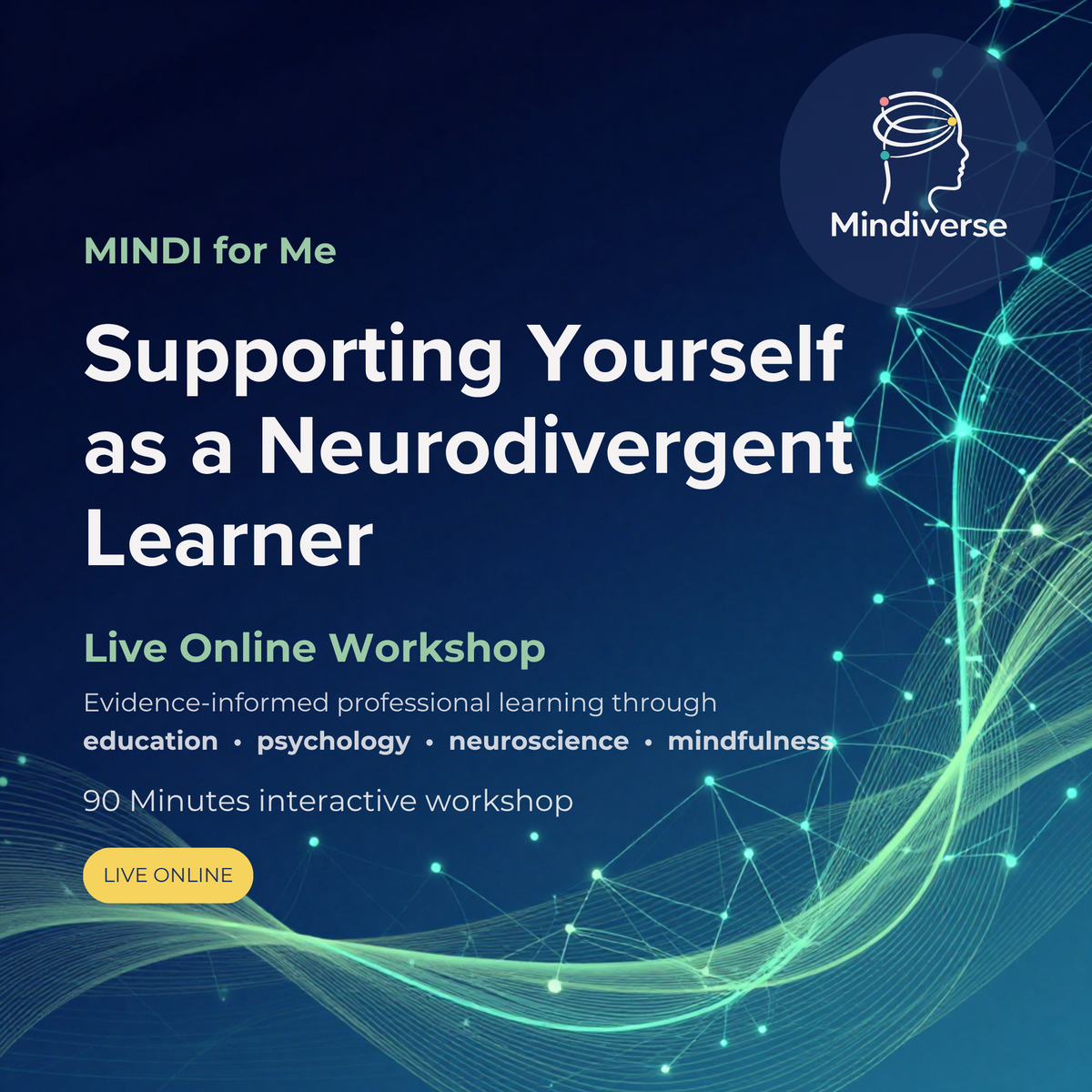
Supporting Yourself as a Neurodivergent Learner
Supporting Yourself as a Neurodivergent Learner
Couldn't load pickup availability
Ever found yourself staring at a task, knowing what you need to do but struggling to get started? Or perhaps you can focus brilliantly on some things, yet other tasks seem to take far more effort than they should?
Learning, planning and managing everyday responsibilities can feel different when attention, executive functions, sensory needs or information processing create additional demands.
In this friendly, practical workshop, we'll explore how to better understand your own learning needs, recognise barriers and try approaches that might make things more manageable. You'll have space to reflect on your strengths, consider what support you need and build a toolkit that works for you.
Where: Live online
Duration: 90 minutes
Who: Neurodivergent adults and young adults, including students, apprentices and people exploring their own learning needs
Experience: No previous knowledge needed
What will I learn?
By the end of the workshop, you'll have explored how to:
- Understand neurodivergent learning: Explore how attention, executive functions, sensory processing and information processing can influence learning and everyday tasks.
- Recognise your strengths and barriers: Reflect on your preferences, environments and learning needs without relying on fixed learning-style labels.
- Build self-advocacy and psychological safety: Explore ways to communicate your needs, ask for adjustments or support, and respond to mistakes without unnecessary self-criticism.
- Try practical learning strategies: Explore approaches to planning, starting tasks, memory, cognitive load, sensory regulation and rest.
- Develop your personal learning toolkit: Identify strategies and adjustments that fit your strengths, goals and circumstances, with flexibility to review and adapt them over time.
Who is it for?
This workshop may be particularly useful if you:
- Find starting tasks, planning or organising information challenging.
- Experience sensory overload, overwhelm or fluctuating attention.
- Want to understand your strengths and learning needs better.
- Are studying, working, returning to learning or developing new skills.
- Would like to feel more confident asking for support or adjustments.
You don't need a formal diagnosis, and you won't be expected to share personal experiences unless you choose to.
What will we do?
Explore how your learning brain works
We'll look at attention, executive functions, sensory processing and information processing, recognising that everyone's experiences are different.
Recognise your own barriers and strengths
Through optional reflection activities, you'll consider which environments, tasks and expectations support your learning and which make it harder.
Explore self-advocacy and psychological safety
We'll discuss communicating needs, requesting support or adjustments and responding to mistakes with greater understanding.
Try practical approaches
Drawing on the MINDI approach, we'll explore task initiation, planning, memory supports, sensory adjustments, manageable routines and rest.
Build your personal toolkit
You'll identify a few strategies to try, considering your goals, available capacity and how to adapt approaches when your needs change.
What's included?
- A 90-minute live, interactive online workshop.
- Optional reflection and practical activities.
- A downloadable neurodivergent learner resource pack.
- Adaptable prompts, strategies and planning activities.
- Opportunities to ask questions.
- A follow-up email with resources.
Why a brain-friendly approach?
Attention, working memory, executive functions, sensory processing and emotional regulation can all influence how we learn and manage everyday demands.
We'll draw on psychology, neuroscience, education and neuroinclusive practice to explore how these processes interact with the environments and expectations around us.
We'll also consider why there isn't a single approach that works for everyone. Your needs may vary depending on the task, environment, energy levels and other circumstances.
The aim is to help you understand your own experiences and make informed choices about the support and strategies that feel useful.
Frequently asked questions
Do I need a formal diagnosis?
No. You're welcome whether you're diagnosed, awaiting assessment, self-identifying or exploring your learning needs.
Is this only for students?
No. The approaches are relevant to education, workplace learning, professional development and everyday life.
Will I have to speak or share personal experiences?
No. Activities are optional, and there will be different ways to participate.
Will you tell me exactly which strategies to use?
We'll explore a range of approaches and help you identify what may suit your own needs.
Is this therapy or medical advice?
No. This is an educational workshop and doesn't replace personalised medical, psychological or therapeutic support.
Can I request accessibility adjustments?
Yes. Please share any access needs when booking.
Will the session be recorded?
Unless a recording is specifically stated on the booking page, please plan to attend live.
Will I receive resources?
Yes. You'll receive a downloadable learner resource pack and a follow-up email with resources.
Share